Fact Sheet Agri-Hub Ethiopia
Fact Sheet Ethiopia

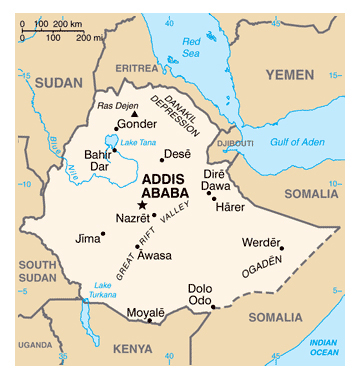
Agriculture is the foundation of Ethiopia’s economy, accounting for half of GDP and 80% of total employment (population 83 mln.). Principal crops include coffee, pulses, oilseeds, cereals, teff, potatoes, sugarcane and vegetables. Ethiopia has the largest livestock population in Africa and 348,000 km2 of agricultural land.
Most of the smallholders live in the central highlands, between 1,500 and 3,000 meters and hold on average 1.2 ha. Here, soils are clay or loams and have potential when properly managed and drained. Agriculture in the lowland peripheries (below 1,500 meters) is nomadic, engaged mainly in livestock-raising on sandy desert soils and low rainfall.
Ethiopia’s agriculture is plagued by periodic drought, soil degradation caused by overgrazing and poor infrastructure. Ethiopia’s new Growth and Transformation Plan aims to invest in commercial agriculture by focusing on advanced farming technology, high value crops, progressive irrigation techniques, improved seeds, increased fertiliser use, and strategies to yield multiple harvests each year.
The Agri-ProFocus Ethiopia Agri-Hub’s first activity started in 2007 with the Ethiopia Learning Alliance, which promoted farmer entrepreneurship in a value chain approach. Today, the Agri-Hub has over 630 connected professionals and over 40 member organisations. The innovation communities are about Business development services, Cooperative development, Contract farming, Access to finance and Gender in value chains.
Agri-Hub Ethiopia promotes farmer entrepreneurship by 1) matching farmers and agri-business and 2) by improving practice of support organisations.
In 2012, Agri-Hub Ethiopia (via ICCO) has signed a contract with the Dutch Embassy for a Food Security and Rural Entrepreneurship fund. This fund will promote and support agricultural innovation and joint action in rural Ethiopia through calls for proposals centred on innovative solutions.
Fact Sheet Ethiopia
Annual Report 2013 Agri-Hub Ethiopia
In the third week of August, a group of Dutch parliamentarians visited Tanzania and Ethiopia to investigate the opportunities for Dutch agri-business in those countries. Agri-ProFocus was present at both occasions.
 We have moved to our new online platform! This website is now closed for new contributions Soybean Oil Extraction Machine Manufacture, Exporter, Supplier The 7th Agribusiness Finance Fair to be held in Haramaya Automatic Oil Pressing Machine Introduction The new platform - We're almost there FSRE Fund launches 3rd call with focus on 4 sectors (deadline concept notes 28 Nov) Do You Want to Buy Soybean Oil Pressing Machine with Competitive Price Good News! Sell Rice Milling Machine with Cheap Price How to Choose High Quality Rice Milling Machine?